Cold forging shapes metal at or near room temperature, and the part work-hardens [1]. Hot forging works the metal above its recrystallization point, high enough to avoid strain hardening [10]. Cold forging holds closer tolerances but needs higher forces, costlier tooling and larger quantities, and suits smaller parts [1][2][4][10]. Hot forging needs less force and has virtually no size limit [1][10].
Side by side
The Forging Industry Association’s comparison for steel parts [10]:
| Cold | Warm | Hot | |
|---|---|---|---|
| Deformation pressure | Very high | Medium | Low |
| Tolerances | Closest | Close | Generous to close |
| Tooling cost | Highest | High | Lowest |
| Energy cost | Low | Medium | High |
| Material cost | Higher | Medium | Lower |
| Size range | Smallest (1/4–20 lb) | Small to medium (1/2–30 lb) | Virtually unlimited |
Warm forging heats the workpiece to a temperature significantly below the typical hot forging temperature [1].
What changes with temperature
- Tolerances. The lower temperature gives greater dimensional accuracy [1]. Cold forming reaches ±0.001 to ±0.005 in., against ±0.020 in. for hot forming [10]. Cold forgings need no draft angles to release them from the tooling [4].
- Force. A hot workpiece flows more easily and needs less force [1]. Cold, the metal flows less well and higher forces are needed [1].
- Scale. A cold workpiece is too cool for scale to form [1].
- Strength. Cold forging work-hardens the part [1]. Hot forging diminishes work hardening or avoids it entirely [1].
- Strokes. Cold forgings are almost always made in several forming strokes. If the material reaches its formability limit, it is annealed before the next stroke [6].
- Size. Commercial cold forgings typically weigh less than 23 kg (50 lb) [4].
Which process fits which job
- Quantity. Cold-forging tooling typically costs five to ten times as much as tooling for equivalent hot impression-die forgings, but it lasts much longer [2]. FIA recommends quantities approaching 10,000 lb of parts per month to offset the tooling cost; with materials more expensive than steel, cold forging can be economical at lower quantities [10].
- Shape. Relatively small parts that are rotationally symmetrical, need high strength and precision, and are made in larger quantities are candidates for cold forging [3]. As shapes get more complex and quantities rise, impression-die forging becomes the process of choice [3].
- Very large parts, few parts: open-die forging is the typical choice [3].
- Tooling and setup costs are spread over the order, so their effect on the piece price falls as the quantity rises [9].
Materials
Every major alloy group used for hot forging includes alloys suitable for cold forging [5]. The more alloy content, the less deformation is possible in one stage [5]. Cold-forging steels are generally carbon and lower-alloy grades with less than 0.45% carbon; 300 and 400 series stainless, aluminum alloys up to 6061, brass and bronze are also cold forged [10].
Forging titanium
- Titanium alloys are more difficult to forge than most steels [8]. FIA gives 1,700 to 2,300 °F (925 to 1,260 °C) as the forging range for steels and for titanium and nickel alloys [7].
- Processing is done with special care to limit surface contamination by oxygen, carbon or nitrogen [8].
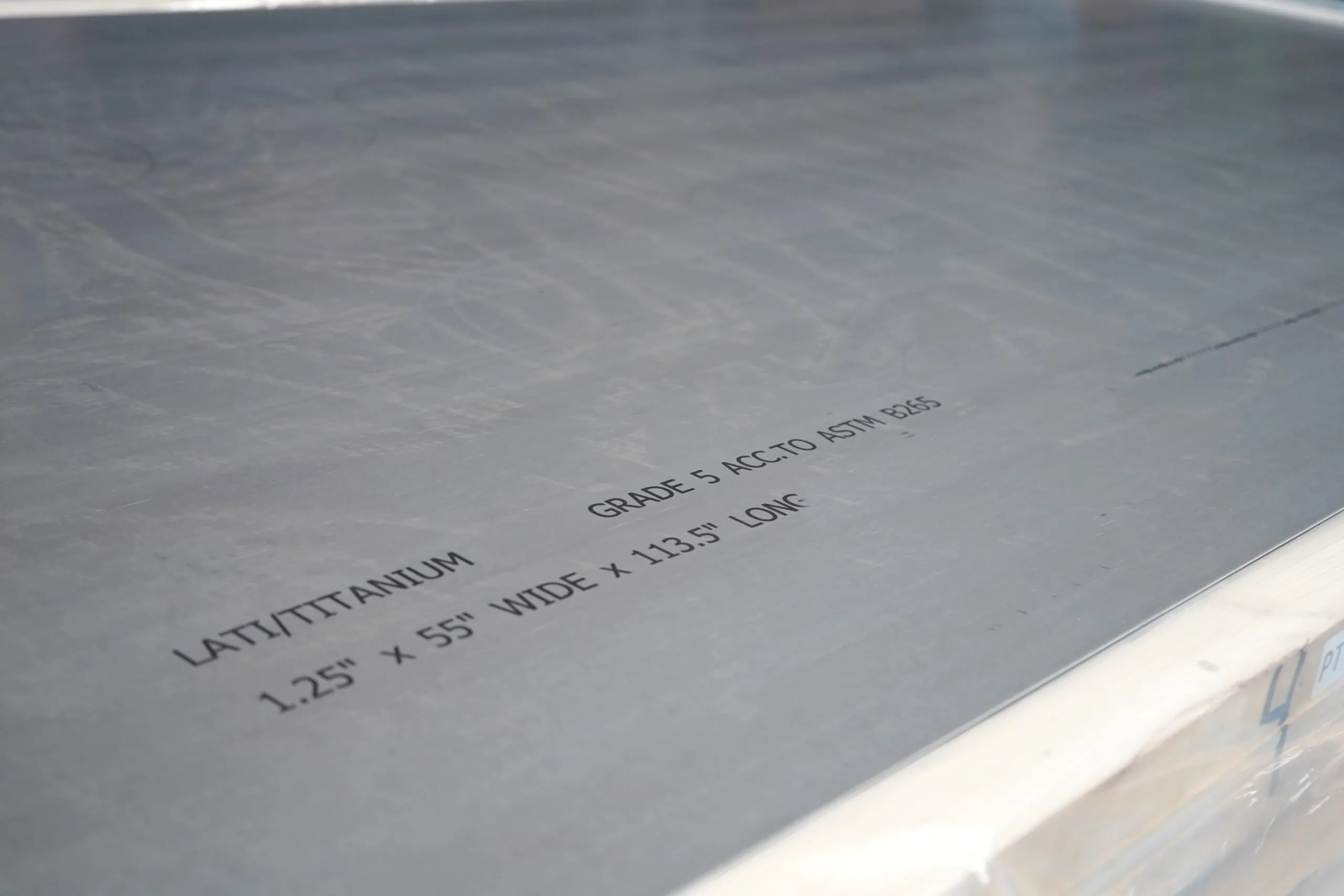
- Ti-6Al-4V (Grade 5) is the most common titanium forging alloy [8].
- For Ti-6Al-4V made by casting, the β-transus is about 995 °C; forging below it is used much more often than forging above it [11].
- Titanium forgings typically need 20% to 25% greater tolerance than steel forgings [10]. They can be forged to precision tolerances [8].
Open die and closed die
- Open-die forging is a hot process that uses standard flat, “V” or swage dies [1].
- Impression-die (closed-die) forging uses a pair of matched dies with contoured impressions [1].
- Compared with impression-die forging, open-die forging has higher per-piece costs, less dimensional precision and more finish machining [1].
Forgings from Laube
Laube sources custom metal forgings to customer drawings through its supplier network, and supplies titanium bar in Grades 1, 2, 3, 4, 5, 9 and 23. Send your drawing for a quote.
Sources
- Product Design Guide for Forging, 1.3 Forging Processes (archived copy), Forging Industry Association.
- Product Design Guide for Forging, 3.3.2 Tooling Costs (archived copy), Forging Industry Association.
- Product Design Guide for Forging, 3.4.1 A Comparison of Open Die, Impression Die, Rolled Ring and Cold Forging Processes (archived copy), Forging Industry Association.
- Product Design Guide for Forging, 3.5.4.5 Design Rules for Parts Made by Cold and Warm Forging (archived copy), Forging Industry Association.
- Product Design Guide for Forging, 5.2.4.1 Alloys Used for Cold Forging (archived copy), Forging Industry Association.
- Product Design Guide for Forging, 5.2.4.2 Cold Forging Processes (archived copy), Forging Industry Association.
- Product Design Guide for Forging, 5.2.2.4 Hot Die and Isothermal Forging (archived copy), Forging Industry Association.
- Product Design Guide for Forging, 4.6 Titanium Alloys (archived copy), Forging Industry Association.
- Product Design Guide for Forging, 3.3.5 Quantities Produced (archived copy), Forging Industry Association.
- Forging Solutions: Design Engineering Information From FIA, Cold Forging Articles (archived copy), Forging Industry Association, 2007.
- Forging of PM Ti–6Al–4V alloy at the temperature above β-transus and high strain rate (Wojtaszek et al.), Archives of Civil and Mechanical Engineering, Springer Nature (peer-reviewed), 2023.
Reviewed by Laube,